






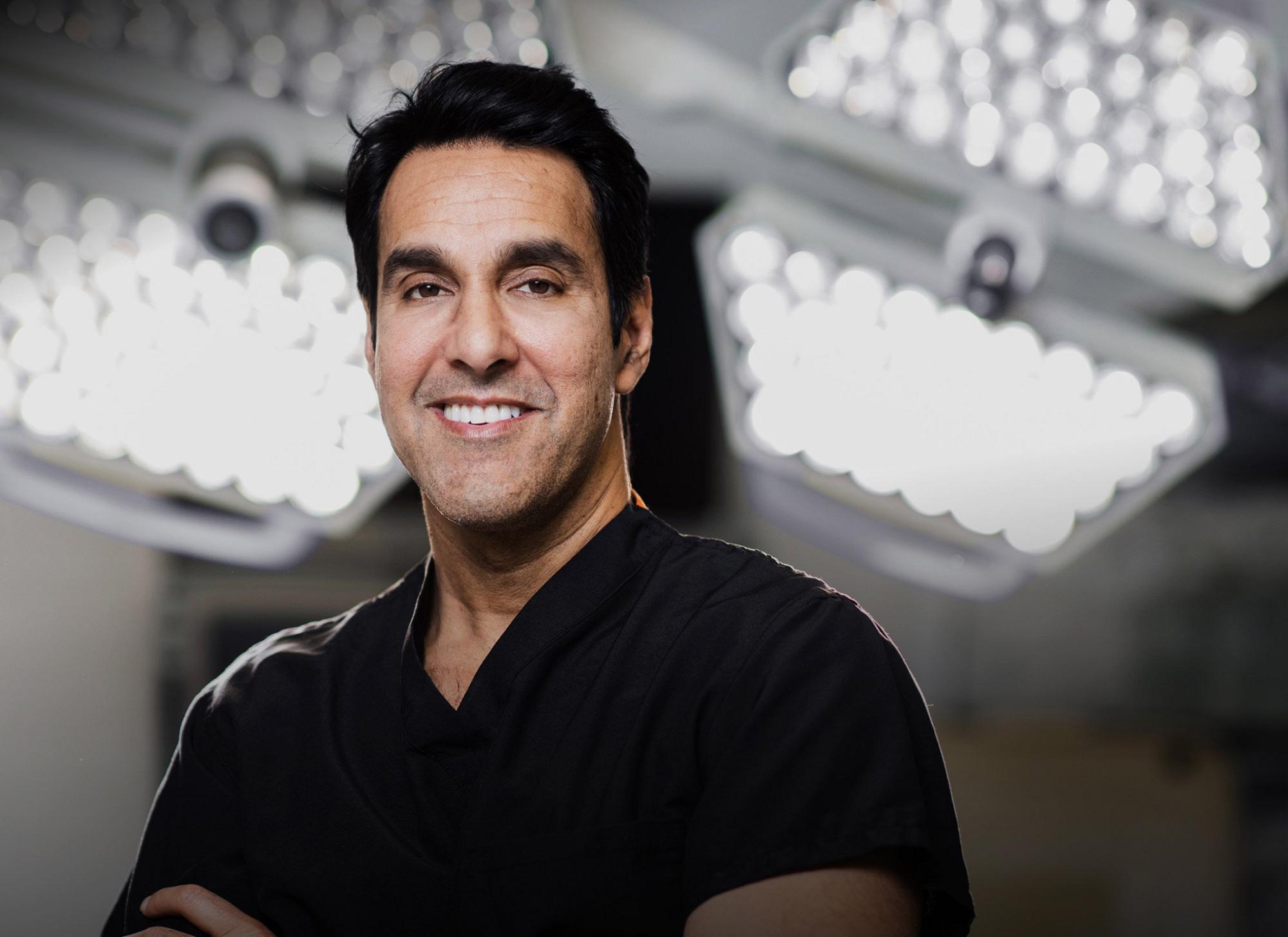
In the latest episode of Beauty and the Biz, host Catherine Maley sits down with Dr. Ritu Chopra, a renowned plastic surgeon based in Beverly Hills and Rancho Mirage. The conversation dives deep into the intentional strategies required to build a premier surgical practice in one of the world's most competitive markets.
Dr. Chopra emphasizes that premium pricing is never a matter of luck; it is a direct result of strategic positioning. He shares how his early exposure as a correspondent on The Doctors helped jumpstart his career, but notes that long-term success relies on consistent results and exceptional patient care.
Dr. Chopra’s journey from a general surgery resident to a Beverly Hills authority serves as a blueprint for any aesthetic professional looking to scale their business through excellence and authority.
Transcript: Premium Pricing Isn’t Luck. It’s Positioning. | Ritu Chopra, MD | Ep. 351
Dr. Ritu Chopra: ...Why are we able to charge that? Well, because we give them top-line service, right? We’re there, we’re responsive, we take care of them. Have any issues or problems? We’re delivering a service that is on the highest end. But everything has to be that way: from the receptionist to the coordinator to the aftercare.
Catherine Maley: Hello, and welcome to Beauty and the Biz, where we talk about the business and marketing side of plastic surgery. I’m your host, Catherine Maley, author of Your Aesthetic Practice: What Your Patients Are Saying, as well as consultant to plastic surgeons to get them more patients and more profits.
Now, today’s special guest is Dr. Ritu Chopra. He is a plastic surgeon known as a facial and breast surgery expert. He is in a multi-surgeon private practice in Beverly Hills, with another practice in Rancho Mirage, California. Now, born and raised in California, Dr. Chopra received his medical degree from the Boston University School of Medicine, then returned to LA to complete his residency at Cedars-Sinai in Beverly Hills.
Now, from his appearances on national television, including The Doctors, to his work refining advanced deep plane facelift techniques, Dr. Chopra has built a reputation that blends media coverage with academic credibility and innovative surgical skills. Now, Dr. Chopra is currently the director of the Keck Aesthetic Surgery Fellowship at USC, and has also trained at institutions including Cedars-Sinai and Albert Einstein in New York, and is consistently recognized as a top doctor across major review platforms.
In this episode, we’re going to talk about positioning, premium pricing, surgical specialization, and what it really takes to build authority in Beverly Hills, one of the most competitive markets in the world. Dr. Chopra, welcome to Beauty and the Biz!
Dr. Ritu Chopra: Thank you so much, and thank you for that introduction. I—I really appreciate it, and you summarized sort of my career in 30 seconds.
Catherine Maley: Not easy to do! So, tell me this. The best thing that everyone wants to hear is: how do you go through medical training, go through residency, and—then now do a fellowship, and then how do we get to private practice? So, what was that journey like?
Dr. Ritu Chopra: Yeah. So, I never knew I really wanted to do plastic. So I was doing my general surgery at Cedars-Sinai. Um, and I thought I was going to do trauma critical care. Um, and then I changed sort of my fifth year, my chief year at Cedars, to plastic. So I got into a great fellowship in plastic for two years in New York City.
And you know, a lot of people think, "Oh, you got into a plastic surgery fellowship, one of the most competitive fellowships. You’re going to be fine." You know what? The real work starts after your fellowship and when you’re working, because no one hands you patients.
So when I was in my last year at Albert Einstein Montefiore in New York, um, my then-wife and I sent out about 1,500 to 2,000 CVs and letters all across, up and down California, because I’m from California. So we went up and down the coast and we sent them out.
And we got about a 10% response, so we got definitely some interviews and things like that. I also was interviewing at Kaiser in Walnut Creek, it’s close to you.
Catherine Maley: Yes.
Dr. Ritu Chopra: And so I interviewed there, and then Dr. Ordon and Dr. Calvert actually got my resume, and that was the time where Dr. Ordon was about to start The Doctors, so he needed a junior associate. And so we met, we had a lot of things in common. He’s from Long Beach, I’m from Palos Verdes. Um, he went to UC Irvine, I went to UC Irvine. We—so we had a lot of things in common. And so, uh, he hired me. And it was sort of random luck, but not. And I would never have imagined where my career is now compared to where it would have been if I joined Kaiser—like, two different worlds.
Catherine Maley: For sure. What—what a fork in the road! Um, just in case people don’t realize what you’re saying, Dr. Ordon was one of the—almost the original—was he the original, the real original cast member on The Doctors? A lot of people don’t know this, but it’s a very—it was a very popular television show, The Doctors. That—I can’t imagine the flood of demand that came in with him being on that show. The secret is to be on a show frequently.
Dr. Ritu Chopra: That’s right. And he was on every day. So The Doctors ran, to your point, for 13 seasons.
Catherine Maley: Unbelievable.
Dr. Ritu Chopra: And then they put me on the show and I became sort of the—the plastic surgeon correspondent.
Catherine Maley: Oh my god.
Dr. Ritu Chopra: And so, you know, I got thrust into the limelight my first year out.
Catherine Maley: Unbelievable! What was that experience like?
Dr. Ritu Chopra: Yeah, so I had all this national exposure. I met Dr. Phil, I met his son, I met all these different celebrities who were doing surgery on The Biggest Loser—you know, from that show. We did all these—Chaz Bono, we did all these different celebrities. Um, so it was great. It was a great jumpstart.
Catherine Maley: And now you have two—two surgeons in the same practice getting that mega publicity? Like, that’s insane! How—so what was it like? Did you have a call center? Did you have a huge staff?
Dr. Ritu Chopra: I did. It was a call center. But you know, it’s interestingly enough, it wasn’t as busy as you would have thought it would be because it wasn’t—the show wasn’t focused solely on a plastic surgery.
Catherine Maley: Oh, that’s a good point.
Dr. Ritu Chopra: You know, as opposed to like Botched with Terry and Paul. Their show is only plastic surgery so they get a ton. We got some, but we would get stuff like, you know, "I need a GI doctor" because on that day they were talking about, you know, pancreatitis. So we would get all these different calls, not necessarily plastics.
Catherine Maley: Oh, that’s such a good point. How often would they talk about plastics in a given—out of 10 episodes, how many would be plastics?
Dr. Ritu Chopra: Maybe a half to one.
Catherine Maley: Oh, that’s not bad! Yeah.
Dr. Ritu Chopra: Yeah, maybe a half. Um, but only half the episode because, you know, medicine’s huge. So they had so many topics to talk about.
Catherine Maley: Did they give you media training? Like, I can’t imagine standing in front of a camera and saying, "Okay, I’m on." Like...
Dr. Ritu Chopra: Yeah. So, that’s such a great point, because Drew and I did a little media training before—he did a lot more than I did, but I did some with him. Um, we had a coach that we—we would go through lines and try to read the teleprompter and things like that. Um, so we did do that. And then once you do it a couple times, and it just comes naturally, because you know I’m talking about medicine, so I don’t—I don’t really need to think about it.
Catherine Maley: That’s true, too. If you know what you’re talking about, you’re a lot more comfortable with it. But you’re still in front of, like, a live audience. Was that unnerving?
Dr. Ritu Chopra: It was unnerving in the beginning when you would come out and they would all cheer—you know, because it’s—like, they have the people that warm up the crowd. Um, and so they would, like, clap and everything and you—I would get a little nervous. But then once we got onto the topic, then it was just on autopilot.
Catherine Maley: Oh, that’s amazing! So you just jump right in. Like, literally, you are what? One year—you’re in fellow—you’re, like, one year out and you’re already jumping on the—you’re already jumping on TV?
Dr. Ritu Chopra: Yeah, exactly. So...
Catherine Maley: All right, regarding the business side of things. Was—was Dr. Ordon really good at the business side as well? Or—because one of the things about fellowship, you’re trying to learn from somebody who’s been there, done that. How do you run a business? You know, it’s not just the surgery, although that’s super important—the innovative surgical techniques that we’re going to talk about later. But how do you just run a business? How do you market yourself? How do you brand yourself? How—did—did you get all of that from him, or...?
Dr. Ritu Chopra: Yeah, so he was great. So, I love Dr. Ordon like an older brother, so let’s just say that. So, he was great at branding himself. He would do infomercials back in the day. He would do advertising—like in the Yellow Pages back in the day. So he had his, uh, pulse on advertising early. So I learned that from him. I sort of changed and modified what I was comfortable doing. But he was doing—do you remember Randy Alvarez?
Catherine Maley: Of course!
Dr. Ritu Chopra: So he would do a lot of things with Randy Alvarez, those—those infomercials and things like that in the beginning.
Catherine Maley: Yeah.
Dr. Ritu Chopra: Yeah, so he had a lot of—you know, Dr. Ordon’s a very charismatic, good-looking guy, and so he was on a bunch of different shows, like the Jenny Jones show back in the day. So he had a lot of media, and he really was a big proponent of, um, media stuff for advertising.
Catherine Maley: But then you never had to really go chase patients, right?
Dr. Ritu Chopra: I did. I mean, everyone does.
Catherine Maley: So you weren’t working in the OR or the ER, you know?
Dr. Ritu Chopra: Yeah. Yeah, that’s right. That’s fair. Yeah, I wasn’t, like, sewing up lacerations. So yeah, people were coming in. But you know, you have to do great work and you have to take care of patients, and that’s how you sort of build your reputation. Because people can build their careers on advertising, but that’s like pay-to-play, pay-to-play. So once you stop advertising, your flow of patients goes down. As you know, the best way to get patients is word of mouth.
Catherine Maley: Well, if you can get it started with all this PR, and then keep it going and develop that flywheel, you should be in really good shape for—for forever, you know, hopefully. Um, have you found that it worked out that way? Or did you need to jump into social media? Like, were you watching that things were changing?
Dr. Ritu Chopra: Yeah. And so, yeah, social media was changing and so I was jumping on that. Um, but you know, I’m from this area and I did my residency at Cedars, so I had sort of a built-in network of people I knew. I had some bariatric surgeons, I had some breast surgeons, so I had referrals coming in, um, from that. And then you add that on to the credibility that the show like The Doctors gave you and the credibility that Dr. Ordon had, I just had sort of this really nice nest where I could sort of pick things out from.
Catherine Maley: Um, by the way, you’re in a really popular building and you’re in that really popular zip code, 90210. So you’re doing all the right things with positioning and branding. Um, do you use your own OR, or does that building have the ORs?
Dr. Ritu Chopra: Yeah, so we have an OR up in my office between me, Jay Calvert, and Dr. Ordon. Um, so we have two ORs, so we use our own OR.
Catherine Maley: Gotcha. And then, um, isn’t your demand—didn’t you add somebody else recently as well?
Dr. Ritu Chopra: That’s right. And so as Dr. Ordon is sort of, um, semi-retiring a little bit, I hired one of my fellows, because I also help run the aesthetic surgery fellowship through USC, this Aesthetic Fellowship of LA. Five, six years ago, I hired one of our fellows, Dr. Nathaniel Villanueva, and he does a lot of all the body contouring things like that as I move towards facelift surgery about seven to ten years ago. And so I just—so six years now, and now he’s humming along, doing really great. And now this year, at the end of this year, starting July, I’m going to hire another fellow to also come in, um, to help with the load.
Catherine Maley: Okay, is it going to be a dictatorship, or is it going to be a partnership? What—how are you going to set that business model up?
Dr. Ritu Chopra: Yeah. So, that’s right. I look for people that I want to grow with. I’m not trying to make them my slaves, in—or "dictator" in your—in your words. They’re coming in and I give them a very fair deal. I’m not trying to make a ton of money off them, at all. I want them to grow, I want them to be happy. What happens is that all your overhead goes down, right? And so everyone’s making more money. You have people that can look after your practice if you’re out of town, and you really trust these people. And that’s the main thing. I need people that are good people, trustworthy, and great surgeons. And then you’re fine.
Catherine Maley: For sure. Um, but are you going to—is it going to be a partnership?
Dr. Ritu Chopra: Yes. So, I mean, in the terms of partnerships, it sort of depends on the—how much revenue they bring in. It’s more by revenue. So once they get to a certain revenue level, then it’s 50/50.
Catherine Maley: Gotcha. Because one of the issues is you bring in some of these people and now—where do the patients come from? Who’s responsible for them? And in your case, you probably have a nice flow. You have a nice thing going there, so you probably have really good demand. Do you ever give patients to the others?
Dr. Ritu Chopra: 100%. So Dr. Villanueva, I stopped doing any liposuction, I stopped doing any really body contouring, so he got all those patients. And those patients that came to me in the beginning, I’d be like, "No, he’s the guy. He does all the lipo, he’s great, I vouch for him." And now he’s just taken off with social media with my backing, just like Ordon did for me. Yeah, now he’s doing great, and we’re going to do it for our next fellow that’s coming in.
Catherine Maley: I—I frankly, I think it’s always best that you have some boundaries. So like, let’s say you do neck up, he does neck down. Um, I just think that alleviates a lot of turf issues that can arise.
Dr. Ritu Chopra: I—I think that’s absolutely right. And so we’re doing that. But the third guy, you know, Dr. Mukherjee, Vic Mukherjee, who’s coming in, he’s going to do sort of a little bit of everything. He’ll be at a little bit of a lower price point than me and maybe Dr. Villanueva, but he’s going to do breast, but he also is very interested in facial rejuvenation.
Catherine Maley: And that’s another really good strategy. You know, now the caller has a choice. You can have Dr. Chopra, you’re going to wait a lot longer and spend—pay more because he’s that skilled and expert—experienced. Or we have plan B. So it’s your choice, and that way it’s always a yes-yes.
Dr. Ritu Chopra: Yeah, that’s right. So you’re not losing patients. I don’t want a patient to come in and not go to us because of price. Right? If they don’t like us, that’s fine, which—I mean, that will happen. But if they did, um, that’s fine. But I don’t want to lose a patient because, "Oh, Dr. Chopra’s too expensive." Because now they know that Vic is vetted by me, trained by me, doing the same techniques that I’m doing.
Catherine Maley: Well, it’s called, um, the transference of credibility. If they trust you and you trust him, now they’ll trust him. Um, that’s just—it’s such a good business model. I love what you’re doing.
However, now, are you a complete surgical practice, or is non-surgical at all an issue there?
Dr. Ritu Chopra: Yeah. So we do non-surgical in my Beverly Hills office. In my Rancho Mirage office, it’s big. I got a big spa, I got four providers out there, and they’re churning and burning.
Catherine Maley: So let’s talk about that because everyone loves the idea of having a second location until they have one, and then they have to manage it, they have to pay for it, they don’t know what’s going on, you know? So, give me the pros and cons of having a second location.
Dr. Ritu Chopra: So, I sort of was grandfathered in because Dr. Ordon had—too, right? And so I—I’ve always been splitting my time between Beverly Hills and Rancho Mirage. Now I—I split it a lot less, it’s more like 80/20—20% in Rancho Mirage. But the people that are in that location have been with me for 15 years now. So I don’t have to keep as much of an eye as I need to because that spa is sort of just running it, covering a lot of the overhead, and then when we come down to operate, it’s sort of like the cherry on top in that—in that sense.
And that demographic in Rancho Mirage is really good for the early practitioners because their price point is a little bit lower, um, and there’s not a lot of competition out there.
Catherine Maley: Was the point to—um, turn it into a feeder for surgery?
Dr. Ritu Chopra: Yeah, you know, I’m not sure. Dr. Ordon just liked being out in Rancho Mirage. Um, and so...
Catherine Maley: It’s a beautiful place!
Dr. Ritu Chopra: Oh, beautiful! But when I got there, I started revving up the spa as much as I could because I—I could see that was a big thing. So I put a lot of work into that to get it where it is now. Um, and it does feed the surgery practice, but it also, um, decreases our overhead, right? And so if that place is not operating, someone’s not operating there, the spa’s covering it.
Catherine Maley: Gotcha. Um, for those who don’t know, it’s a gorgeous place, Rancho Mirage. You have to learn how to golf because there are literally like, I don’t know, four golf courses when you’re in the plane just getting there. Like, you—they’re just everywhere. Um, and it’s hotter than blazes in the summer.
Dr. Ritu Chopra: Yeah. Well, so let’s be fair. It’s hotter than blazes from maybe March through October—or maybe...
Catherine Maley: Yeah.
Dr. Ritu Chopra: It’s really hot. But then from October through February, it’s the most beautiful temperature in the world, 75, clear, beautiful.
Catherine Maley: I—I take it you—you, uh, use your time there, uh, sparingly, you know, or strategically?
Dr. Ritu Chopra: I—that’s funny you say that. I actually like hot weather. I like it. I’m hot—and so, I like to go out there, we play golf, no one’s out there in the summer. And now they have the Palm Springs Surf Club, so even better.
Catherine Maley: Did you say Surf Club?
Dr. Ritu Chopra: Yeah.
Catherine Maley: There’s no water down there, is there?
Dr. Ritu Chopra: Yeah, so they made a man-made wave where you can go and surf there now.
Catherine Maley: Oh, thank god! Yeah.
Dr. Ritu Chopra: So now it’s like the best spot.
Catherine Maley: What else do you have to do with all that money? My goodness! All right. So, um, regarding staff. Typically that’s one of the biggest challenges, or you tell me: what’s the biggest challenge of running a private practice?
Dr. Ritu Chopra: 100%. You nailed it. It’s the staff.
Catherine Maley: Any tips?
Dr. Ritu Chopra: The biggest tip is when you have somebody that is very capable and good, make sure you pay them well. Right? You just don’t want to lose those people. When you have key people, you have a key coordinator, two key coordinators, a key nurse, a key tech, whatever it is, those are your pillars and you have to pay them and make them buy into the fact that if I do well, they’re going to do well. That’s the biggest thing.
Catherine Maley: Do you bonus on productivity?
Dr. Ritu Chopra: Oh, yeah. Oh, yeah.
Catherine Maley: Yeah. I think that’s so important. Um, back to branding. You have the name Ordon attached to you. It’s attached to your website as well. On the business side, how are you going to, as he fades into the sunset and you take over, how are you going to handle this positioning of the website called ordonchopra.com?
Dr. Ritu Chopra: Yeah. So we’re—it’s great because it has so much SEO behind it because we’ve had it for so many years. We’re actually kind of changing it to be a little more generic, called The Plastic Surgery Institute. So The Plastic Surgery Institute of Beverly Hills, The Plastic Surgery Institute of Rancho Mirage. So that’s how we’re going to position it. And then it doesn’t really matter who comes in and out of the practice.
Catherine Maley: But does that hurt your SEO, and does that hurt your social media? Because everything—I used to have a company name and then now that didn’t matter anymore, they needed to know my name, Catherine Maley. So I—I changed everything to Catherine Maley, even though nobody knows is it a C or a K, how do you spell Maley, you know? Um, because that’s—that’s where it was going. So do you find that to be an issue yet or not?
Dr. Ritu Chopra: Not yet. I mean, so when it comes to social media, I think now it’s really important to have Instagram. So an Instagram’s sort of an individual thing. It’s @DrRituChopra, @DrNathanielVillanueva. And then secondary is the website to vet you. So, I think it’s fine to have your own social media, and then they go to one website. And so the website is not as big of a deal as it was 10-15 years ago. Right? Right.
Catherine Maley: Right. All right, so that’s—that’s a really good point. Everyone’s going to share the same website, you’re all promoted on the website, but you all still have your own separate Instagram. Okay, that’s a good idea.
Dr. Ritu Chopra: Yeah, and it kind of funnels into the website.
Catherine Maley: Yeah. Um, one thing I keep thinking though, Instagram—everything "jumps the shark," as they say, eventually. And Instagram is so ready for somebody to take over, you know, because they’ve just been the big gorilla for forever and I don’t know what’s—I’m just always wondering what is going to happen with that because my recommendation is while you’re on Instagram, just do everything humanly possible to get them to somewhere else, like a landing page or a website, for their name, email, cell—just in case something were to go horribly sideways. You have built a list of people who are actually interested in looking good and feeling great.
Um, because I think it’s going to get a lot more, um, shaky as—as AI happens and chat happens, and—um, have you already noticed that, that the referral sources are now saying chat, ChatGPT?
Dr. Ritu Chopra: Yeah. And Chat—yeah, and Chat.
Catherine Maley: Yeah.
Dr. Ritu Chopra: Chat is an interesting thing because, you know, Chat—even though they think it’s AI, Chat is not AI. Chat is just scouring the internet. So whatever’s on the internet, it’s going to put on Chat, saying, "Oh, these are the top surgeons." Um, but it’s all about your footprint on—on the web. And so you can increase your footprint by getting a PR person and having—throwing all these articles out there. And that’s the problem. Chat will come up with—someone could be out in practice for four years, but they got a PR person that’s been pushing out a ton of—of media for that. And then they’ll show up on top of the Chat, right? And that’s just not credible.
Catherine Maley: Yep.
Dr. Ritu Chopra: Right? So that’s a problem with Chat.
Catherine Maley: Um, actually, I think everyone—everyone knows that in the internet world and they’re always trying to fix it. I think Elon Musk is the only one that’s going to be able to fix it, you know, like who’s legit and who isn’t. Because what’s going to get even worse is all of the crazy AI "is it real or isn’t it?" That’s going to get insane. Um, I—I did a talk where I—I used this software and I was speaking Italian, and that’s crazy. I do not speak Italian. I barely speak Chicago English, you know? And—um, isn’t that crazy? And they—I could have even changed my clothes, changed my hair. And—um, I—haven’t you noticed that too? When you’re scrolling on Instagram, which I shouldn’t be doing, but I can’t help myself sometimes. Um, I can tell something’s up, you know? And I think, "Oh, but it’s really good for a minute. They had me for—they had me for the first 30 seconds." And then I went, "Mmm, something’s funny about that."
Dr. Ritu Chopra: Yeah. So my wife actually sent me something with a dad talking to a little kid, and the little kid was saying, "You know, you shouldn’t talk to mom that way, she’s your queen." And I’m looking at his mouth, and I’m like, "That’s AI." It’s the mouth. Yeah.
Catherine Maley: Yeah.
Dr. Ritu Chopra: And I told her that, she’s like, "I know, but I just wanted to send it to you." Imagine if you’re not discerning and you’re just kind of flowing through like, "Oh my god," you know? And it’s going to—to your point, it’s going to get worse and worse and worse, and we’re not going to know the difference between reality and what’s not real. That’s a problem.
Catherine Maley: Well, you surgeons already struggle with, um, people from other countries taking your photos, using—using all of your stuff, and already that’s an issue. It’s just going to keep getting worse, and I don’t know what the answer is, but I would just say make sure you watermark the heck out of everything and date everything so you can prove that you were there first, you know, it’s yours.
Dr. Ritu Chopra: I think that’s smart. But—but even now they can just generate "before and afters" from AI, right? They can generate "before" of a woman not looking good, and then generate her "after," and then put them on their website.
Catherine Maley: And it’s not even a real woman.
Dr. Ritu Chopra: Not even a real woman.
Catherine Maley: Wow.
Dr. Ritu Chopra: So that’s going to be the issue. Yeah.
Catherine Maley: Yeah. Okay, um, yeah, and apparently we’re going to find out sooner rather than later because this is all changing like overnight, you know? Um, I guess within two years a lot of jobs or something... so I—I’m not sure. I just—I find this such an interesting time to be in and so crazy. Um, it kind of forces you to just do your thing, you know, and what happens happens. But I don’t even know how to prepare for any of this, is the point.
Dr. Ritu Chopra: Yeah, I don’t know how you can, because you and me both probably use—I use ChatGPT a lot.
Catherine Maley: All the time!
Dr. Ritu Chopra: Yeah. Right? Asking questions about—about law stuff or about—about fitness stuff. Right? It—and it spits it out so quickly. I actually had to redo my CV. I put it into Chat and told it to revise it, "Here are a couple things I want" because I’m going to start doing some legal work. And it spit out this beautiful CV with a cover letter with everything in literally five minutes—not even five minutes, maybe like 30 seconds.
Catherine Maley: Yep.
Dr. Ritu Chopra: Imagine. Remember we used to have to do it on, like, you know, the computer and Word and do all that stuff? Now it’s just bam.
Catherine Maley: That—that’s why I—everything else, I love it and I hate it. I—I love it and I’m afraid of it. But gosh, right now it’s a—it’s a very helpful tool to me. Um, but it’ll probably be a threat to me in another year or so. I don’t...
Dr. Ritu Chopra: It’s definitely going to be a threat to radiologists. It’s definitely going to be a threat to some dermatologists, you know? And lawyers.
Catherine Maley: Well, lawyers and accountants are in big trouble. Um, but also surgeons. They’re saying it’s going to be able to do surgery just as well as you can. And I think, "Is that really true? And who’s going to be the guinea pig for that?" I don’t know.
Dr. Ritu Chopra: I mean, I think in terms of dexterity, a computer is—or an AI is going to be better, I think. I—I mean, I think that’s true, because they have no tremor. But you know, there’s decision-making that goes on that it has to learn and things like that. And if things—if—what happens if the AI shuts off? You’re always going to need a surgeon around to take over. And I think that’s the same thing with being a lawyer. So you’re not going to need as many lawyers, you’ll need one or two lawyers and the AI will do the rest. So it’s going to be a de-scaling. So you’re going to have to scale down on how many people you have, like accountants. Instead of having four accountants, you can do one accountant and AI can do the rest. So it’s more going to be—you’re not going to lose the job, they’re just going to be less people doing them.
Catherine Maley: Well, I guarantee there are already so many things that I turn to Chat for that I used to pay for, and if I’m doing that on this small scale, I mean, and go billion-triple it, quadruple it, you know, with everyone doing that. That’s—that’s the insane part, how quickly all of this will turn, you know? And then what do you do? Like, I have two young girls, what are they going to do? They’re four and six. What are they going to do when they get older? Right?
Dr. Ritu Chopra: Apparently surf with you! Honestly, what—seriously, like, what is everyone going to do?
Catherine Maley: I don’t know.
Dr. Ritu Chopra: I don’t know. Um, but staying on the bright side, before the world comes to an end...
Catherine Maley: Yeah, exactly.
Dr. Ritu Chopra: You know, remember that we thought in 1999 the world was going to come to an end when we hit 2000? Remember we thought the computers were going to stop, we thought everything was doomsday? So...
Catherine Maley: I worked in the Silicon Valley in 1999, and we were waiting for the whole world to end for sure.
Dr. Ritu Chopra: Total...
Catherine Maley: And then nothing happened. It’s like, "Seriously?" So anti-climactic. Yeah. That’s so funny.
Um, do you have any other plans for scaling? Like, you’ve just brought on another fellow, so now you’ve got three again in the office, and you have this other office, the med-spa-ish office. Any other plans, or you’re good?
Dr. Ritu Chopra: No. So my plan is to do this. Um, so I’ve been practicing for 16 years now. And so I’m—sort of at the top of the food chain when it comes to, like, facial rejuvenation and things like that. But I’m actually trying to scale back and actually put more emphasis in actually running the business, and trying to actually figure out the things that where we can cut overhead and market better. That’s what I’m kind of doing. So once I get the second guy up and running, that’s where I see myself more, of actually running the business. Even though I’m doing it now, I can spend a lot more time doing it.
Catherine Maley: Oh, good—that is never-ending, like that scale of economy I assume you’re looking at, um, just learning business. You know, none of you got any of that in school. I happen to have an MBA, which is why I ended up in this business, saying, "Wow, you guys could really use some help with the business and the marketing side." Because you—you did your side, which was the surgical.
By the way, before I forget, it is so important that people understand what you have done to get where you are right now. You are a big shot, quite frankly. You’re a big shot. And—you’re really well known and you have a fantastic reputation. I hope it’s good and clean, because I think it is and all is well. But one thing you have done that others have not: you have developed and surrounded yourself with other killer, growth-minded surgeons who want to be the best. And you have done it without your egos getting in the way, and—I call it your mastermind. You have this killer mastermind. Can you just talk about that and—and how valuable it is to be surrounded by huge thinkers?
Dr. Ritu Chopra: I think we are really lucky, at least in our sort of friend group that we have, um, because you’re right. If—you can be as competitive as you can, but you can be—should be competitive with yourself. You can look at somebody else and be like, "Oh, you know, they’re doing great. Maybe I can learn from them." Because as plastic surgeons, as you know, there’s a lot of egos involved, right? Plastic surgeons think they’re at the top of the food chain. They—they look down on facial plastic surgeons, they look down on oculoplastic surgeons. Right?
What I’ve done is very different. I’ve looked to facial plastic surgeons like my very good friend Ben Talei. He has taught me a lot about deep plane surgery. Um, I look to my friends like Kami Parsa or Guy Massry for oculoplastics. And I’ve learned so much, and everyone is so helpful and giving of their time and their expertise. So we formed sort of this club or group of these great surgeons, and all we’re really doing is trying to collaborate and push the field forward. As I’ve said before, at the bottom they’re competing. At the top, we’re all collaborating. Very different.
Catherine Maley: That should be a meme: "At the bottom you’re competing, at the top you’re collaborating." That is such a huge pearl. I hope everyone heard that.
Dr. Ritu Chopra: Yeah. I—I think it’s—I think it’s very, very true. And we’re very lucky when we get people from, like, New York or anywhere across the country or the world, they’re like amazed about how good friends we are. Like, "You’re not competitive with Ben?" I’m like, "No. I mean, we see the same patients, but patients are going to love him, patients are going to love me, patients are going to love Mark Mani, whoever it is, there’s a patient for everybody, right?" We just want to provide a great service, great surgery, you’re going to get patients.
Catherine Maley: Um, back to staff for a second. When you’re playing at the level you play at, um, you charge a lot because you’re worth it. How do you get—how do you get staff on board, because they are representing you and your standards of excellence have to come through them as well? So—because they affect your reviews, they affect the patient experience. When you’re playing at the level you’re playing at, those patients, they are paying for service. They are paying to be treated a special way, and they expect results. So it’s just a whole different level. How do you get the staff on board?
Dr. Ritu Chopra: That’s a—a really great question, and I haven’t figured out completely, because you’re right. You need that expert care like they get at the Four Seasons, like they get at the Chanel store. Whatever. That’s what you want to mimic. And it’s hard because your staff may not be used to charging 100 grand for a facelift. Right?
Catherine Maley: They can’t even say it!
Dr. Ritu Chopra: Right. Exactly. And they’re like, "What? Why would someone do that?" You know, so there can be sort of a—sort of an inability for them to comprehend that and put that value to me and the procedure I’m doing because they see like 100K like, "That’s a payment on a house." Right? Um, and so you have to teach them why. Yep. You gotta teach them the why—why are we able to charge that? Well, because we give them top-line service, right? We’re there, we’re responsive, we take care of them. Have any issues or problems? We’re delivering a service that is on the highest end. But everything has to be that way: from the receptionist to the coordinator to the aftercare. Even though I’m not in charge of the aftercare, I sort of have to be in charge of the aftercare. Because they have to be at a certain level. And if they’re not, the—your clients are going to be like, "The aftercare was terrible." And they blame you, essentially, right? Because you’re their sort of guide through all this. And so you have to have your hands in everything, even if you don’t own everything.
Catherine Maley: Um, your name is—it’s just such a balance, because I have—like, you go to your website and you think, "Whoa, this guy is something else!" And then you—and then you pick up the phone and call, and you say, "What is that all about?" You know? And it just starts with the phone, and then when you’re greeted, you know, when you come to visit. Um, every little step has your name on it, you know? Good or bad.
Dr. Ritu Chopra: Every detail. Like, "Did you offer them water when they came in? Did you, you know, did you tell them—" Every little detail matters. "Are the rooms clean when they go in there?" Right? Every little thing that you probably don’t think of, it’s not like going to a—a pediatrician or, you know, your internal medicine doctor. It’s concierge medicine at the highest level.
Catherine Maley: Everyone needs to go to a Four Seasons and see the difference between a Four Seasons and a—you know, whatever, a Marriott, you know? There’s just such a difference. And—but that—if you’ve ever read that book for the Ritz-Carlton, he wrote a book on it. The guy is still alive, the guy who developed all the Ritz-Carlton. He’s from Germany and he is just all about ultra, uh, luxury and customer service. He’s all about the customer. Um, it’s just amazing. But it’s the point of "how do you get everyone thinking that way?" And that’s why they had that motto: "It’s ladies and gentlemen serving ladies and gentlemen." And everyone knows that and they’re—it’s drilled into them daily, you know? "We’re here for the customer, we’re here to make them happy." They used to have a rule, um, every staff person could spend $2,000 to make the customer happy. Isn’t that crazy? Yeah. So if I forgot my blow dryer, um, they would run out and get me a blow dryer, you know? And I thought, "I like this place," you know?
Dr. Ritu Chopra: That’s great. And it’s not to say like, Marriotts are great too. Right? But you know, just different. Just different.
Catherine Maley: Yeah. There you’re only paying $300 a night, which is ridiculous. But yeah. Um, and the other’s starting at $1,000 a night. But—but it’s—it’s all branding and positioning and marketing and mindset. You know? Do you want to be the best? If you do, then you’re playing, uh, you know, a big game and you have to—you have to believe it. You have to believe you’re worth it. Guy Massry said that to me. Guy said that to me a couple years ago, and he’s like, "Ask Guy, you know, my prices are this." He’s like, "Well, I’ve seen your work and I can tell you you’re as good as anybody that I know." He’s like, "But you have to believe it for you to charge that." Right? So it’s a mindset.
Catherine Maley: But then you also have to prove it, um, and the patients want to see your transformational results. And when they’re paying that kind of money, they’re looking for transformation, you know? So—and we’ll talk about that right now because another thing that is a big deal is trying to differentiate yourself when you are in the middle of the most uber-competitive market.
So—um, the one way you’re differentiating that I’m seeing a—well, many ways, but the—the big one is your signature treatment and you call it the Define Deep Plane Facelift. It’s so funny now, consumers understand what a deep plane is now and they’ve got the ponytail lift and they’ve got all the—um, the lingo down. Right? The lingo. Aren’t you surprised by that? Like, how educated everybody is now?
Dr. Ritu Chopra: It is. Well, you can—you can blame or you can praise social media for it, right? That’s—that’s where it all came from. But yes, it is very hard to differentiate yourself from that. Because everyone has a name now to their facelift. And the truth of the matter is, most of us that are doing extended deep plane are doing things very similarly. Right? But there’s a—you know, there’s a handful of guys that I trust that are doing it like I’m doing it. Those guys I can say with confidence that you’re going to get a good result from. The other guys that I don’t know and are sort of dabbling in it, I—I can’t really vouch for them. But you’re right, my Define Lift, it’s just an acronym. It stands for Deep Plane Extended Facelift, Including the Neck and Elevation of the brow. D-E-F-I-N-E, Define Lift. So I’m raising the brow, I’m raising the cheeks, I’m raising the jowls and the neck, all in one composite tissue, and I call it the Define Lift.
Catherine Maley: Nice. Um, your photos are fantastic, by the way. And for everyone who says, "Oh, my patients are so private, they would never do that," I have watched certain surgeons—and I know what the secret is, it’s volume. You have to ask a lot of people. But your Instagram is full of transformational photos. That’s what allows you to charge what you charge. And—and you’re putting up your best work, but—I mean, how are you getting them to approve that?
Dr. Ritu Chopra: So, that’s sort of the bane of my existence, and I—so I would love to put every single person up there because I’m so confident in my surgeries. And some of them are 10 out of 10, some are 8 out of 10, but they’re all very good. Right? I don’t have a 5 out of 10, and that’s the key, is having consistent results over time. That’s the key to it. But the majority of my people will not let me—will not let me show the pictures. And I always ask them. I’m always asking them. I’m like, "Listen, I know you don’t like social media, but you’re looking so good, will you think about it?" "Yeah, I’ll think about it." I want to—because they—at that point they love you because they look so good. And so they’re like, "I would really want to help you, I just don’t want my pictures up there."
And I also think there comes to—a little stigma about "I want people to think I just look like this without any help."
Catherine Maley: But you’re in Beverly Hills! Like, I—I don’t think there should be any stigma anymore. And—like that Karen—K—what’s her name, the Jenner lady? She’s really helped you guys a lot. Um, yeah. I mean, those people, those Kardashians, um, they can’t—they can’t tell you enough about their plastic surgery. So, and frankly, their friends are going to see them and say, "My god, you look fantastic!" I—I don’t get it, I—I don’t get it. But—but yeah, I guess just keep asking. But your photos are amazing on Instagram. However you’re getting that done, uh, you’re doing a lot of surgery then.
Dr. Ritu Chopra: I—I appreciate that.
Catherine Maley: What would you say—like regarding the marketing? You’re—by the way, is The Doctors still playing?
Dr. Ritu Chopra: It’s playing I think on—on demand or something, but not—it’s not any—any new stuff.
Catherine Maley: Okay. So do you still get anything from it, or where do you get the patients now? Is it all word of mouth now, or are you still—
Dr. Ritu Chopra: Yeah, word of mouth. Instagram. Um, yeah. But mostly word of mouth. Probably about 70-80% word of mouth. You know, I’ve been doing it now for 16 years and I’m sort of decreasing my volume, so if I do two or three facelifts a week, I’m good. You know?
Catherine Maley: Isn’t that what you want? Like a—nice life balance. You have young kids! Like, that’s how to do it. Specialize in something. I keep forgetting you’re a plastic surgeon because I—you seem like a facial plastic surgeon because you do so much face. Um, do you still do breast or now are you just doing—
Dr. Ritu Chopra: I do. I do. So I used to do a lot of explants for breast implant illness and people that aren’t happy with their implants. So I used to do a lot of that, and I still do that. I still have a—a big footprint in that as well. But so this is an interesting thing. I—I do think being a plastic surgeon, it allows you to do a lot of different things. But if you want to be really, really, really good at something, I think you have to specialize in a couple of procedures. And get your name out for a couple of procedures. Because you can do breast, you can do your face, you can do lipo, you can do noses. But when you’re spreading yourself out, you’re not going to be able to command those prices unless you’re an expert in that field. Right? You can be a—a jack-of-all-trades and you can make a great living, I’m not saying that. But if you really want to get into that upper echelon charging that much money, you got to be an expert. You got to be talking about it at meetings, you got to be showing your results over and over again, you got to be talking about it every day. That’s the key, I think, in my humble opinion.
Catherine Maley: I completely agree. Um, another one are the reviews. Are the patients willing to give you a review? If they won’t give the photos, will they at least give you a review?
Dr. Ritu Chopra: Yeah, I think reviews are—are easier to do for sure.
Catherine Maley: Good. Because, you know, um, Google and—and Chat love the reviews too, so... yeah, so if you can get that. Um, any—any words of wisdom? Like, you just gave a really good one there, and I say this all the time: if you want to charge that kind of price, you’ve got to specialize, you cannot be everything to everybody. But so many surgeons are so afraid of that, they’re so afraid they’re going to lose—it’s a mindset thing. You just have to—you know, decide what you’re going to—who you’re going to be in the world. But you have to position yourself because the patients are going to position you. If I’m—if I have a lot of money, um, or I want to rearrange my face—face is different than body. Um, I want to go to somebody who’s done an awful lot of facelifts. And—um, it’s just—it’s so logical to me to—you know, yeah, but you have to decide, and then it changes things, then you don’t do as much surgery but you get charge—you charge more a lot for it, you work less. It seems to me that makes a lot of sense.
Dr. Ritu Chopra: And that sort of gives your longevity to your career as well. I—I think that’s right. And no one’s really taught that to plastic surgeons, right? Because plastic surgeons do everything. But then you have the facial plastic surgeons come right along and now they’re really getting a lot of the facelifts because they’re saying, "Oh, well, we’re the experts because that’s all we do." Yep. So the truth of the matter is, plastic surgeons are the ones who developed facelifts. You know, um, so with Tim Marten, all these different guys who have done it, we’re the—plastic surgeons are the one who developed it. And so we have to be true to that. But you can’t be the jack-of-all-trades, you just can’t. And you—you may lose a little revenue here or there, get yourself a junior to have him do all the—the liposuction and the body stuff. Right? So you can focus on something. And you’ll see that—you think you’re going to go down, but you’re going to get way more facelift consults than you ever would have.
Catherine Maley: You’re right. Um, any other words of wisdom for those coming up, or those kind of at a crossroads, like, "Where should I go with it?" Any—any thoughts?
Dr. Ritu Chopra: Yeah. I—I think it’s important to determine what you want for your return of investment. Right? I think that’s how to look about—look at everything. And I think you have to model it—what—and I kind of—we kind of learned this from Grant Stevens, of how much you want to make in the OR per hour.
Catherine Maley: Oh!
Dr. Ritu Chopra: And then you have to—you have to see which of your procedures is doing that, and which one—which one correlates to the one you like the best. And so you kind of choose that. If it’s mommy makeovers, okay, great, you’re going to be the mommy makeover expert, but you’re charging this much an hour because you’re an expert in that. Or you’re going to be the facelift guy, um, and you’re going to charge a certain number in the hour. But you have to be—be passionate about it. You have to keep on growing, and like, I’m constantly looking at videos, talking to guys, "How can I improve this? I have this little problem I’m getting, what do you guys think?" You got to be—keep on pushing yourself, because once you sort of stagnate, you’re going to be left behind quickly.
Catherine Maley: Yeah, for sure. Thanks for that. And—um, we’re getting ready to wrap it up, so this is the fun part. Um, give me a crazy patient or staff story you care to share.
Dr. Ritu Chopra: Yeah. Well, so I got a lot of crazy things that happened, but this is one crazy thing for sure. So I was doing a male facelift, um, and he said he wanted to do it under just IV sedation, sort of local and IV sedation. I said, "Okay, sure, fine." So we do it, we finish the surgery, you know, he’s a pretty fit guy, we wrap him up, he has a big wrap, he has some—some drains coming out, and he goes to the bathroom, um, and he comes out and he’s—I don’t know if he’s putting on a—a show, but he’s like, "My father just died." And we’re like, "What?" He’s like, "My father just died. I got to get out of here." We said, "Okay, you know, we’ll bring you down to your—your ride, um, in a wheelchair." He’s like, "Okay, fine." So we get him in the wheelchair, bring him down, you know, we’re on the 10th floor, so we bring him down 10th floor from the Roxbury Building. We get him outside and he looks at us, he’s like, "So I’m outside now?" And we’re like, "Yeah." He gets up and takes off running down the street in his—like, he still had a little bit of a gown on because he was going to go to aftercare.
Catherine Maley: Oh my god!
Dr. Ritu Chopra: With the gown on and the little sandals and just takes off down the street. We don’t know what happened to him. He came back like a week later and I don’t know about his father and he was completely fine, but it was—we don’t know if he was hallucinating or what happened to him, but it seemed like he had this plan in his head of what he wanted to do. Um, it seemed like he didn’t want to go to aftercare or whatever what happened, but he just took off in a gown with a big wrap around his head.
Catherine Maley: That is insane! That is the public, you know? There you... holy cow! Okay, and last one: tell us something interesting we don’t know about you.
Dr. Ritu Chopra: Yeah. So, you know, I was born and raised in the Southern California, um, been here my whole life. I trained, as you said, on the East Coast for different things. But I’m a big avid surfer. Um, and I think that ability to relate to people because I don’t have that stodginess or ego about myself because I’m just truly a surfer at heart. Um, I would—be love to surf every day, um, and just enjoy nature and be with my family. But being a—being an avid surfer for—now 40 years now.
Catherine Maley: Whoa! Yeah. Have you ever—as you—done the Hawaii thing and all the big waves?
Dr. Ritu Chopra: I’ve—not as big as like Pipeline, Waimea, but yeah, I’ve been to Hawaii, I’ve been to Costa Rica, I’ve been to Spain, I’ve been to all these different places to surf.
Catherine Maley: Good for you! Wow. Oh yeah, when—when you retire you can be the surfer dude.
Dr. Ritu Chopra: Yeah, that’s right. Teach surf lessons. I would love that actually.
Catherine Maley: All right. Well, if anyone wanted to get a hold of you, your website is currently—it’s still ordonchopra.com.
Dr. Ritu Chopra: You got it.
Catherine Maley: Okay, and then your—um, Instagram is @DrRituChopra. Yeah?
Dr. Ritu Chopra: You got it.
Catherine Maley: Okay, thank you so much! It has been a pleasure to get to know you better.
Dr. Ritu Chopra: Thank you. I appreciate you having me on.
Catherine Maley: Sure! Everybody, that’s going to wrap it up for us today. If you would so kindly subscribe and give me a review at Beauty and the Biz so we can grow our audience. Then if you’ve got any questions or feedback for me, please leave them on my website at catherinemaley.com or you can certainly DM me on Instagram @CatherineMaleyMBA. Thanks so much, and we’ll talk again soon.
No matter what brought you here, a visit with our doctors will bring out the best in you. Call us today to schedule your initial consultation, either in person or online.
465 North Roxbury Drive, Suite 1007, Beverly Hills, CA 90210

Hours of Operation
Mon-Fri: 9am – 5pm
Closed Weekends



